
Real-World Assets
Definition, Types, and Role in Tokenized Finance
What Are Real-World Assets
RWA Tokenization Explained
Tokenized Real Estate
Tokenized Commodities
Real-World Assets (RWA)
RWA Definition, Asset Categories, and Tokenization Frameworks Explained
Real-world assets (RWAs) are physical or financial assets that exist outside digital networks but can be represented, recorded, or managed using modern financial and technological infrastructure.
Examples include real estate, commodities, bonds, and other asset classes traditionally found in the real economy.
In recent years, real-world asset education has become increasingly important as financial systems explore ways to improve transparency, accessibility, and operational efficiency.
This page provides a neutral, educational overview of what real-world assets are, how they are categorized, and how they relate to tokenized finance and governance frameworks.
This content is intended for learning and general understanding only.
Many tokenized real-world assets rely on legal structures such as special purpose vehicles (SPVs) to ensure enforceability of ownership rights and proper allocation of economic claims.
In Simple Terms
In simple terms, real-world assets (RWAs) are physical or legally enforceable financial assets such as real estate, commodities, or bonds that can be represented digitally, including through tokenization, while still relying on real-world legal rights and documentation.
Explore Real-World Assets in Detail
The following guides expand on the structure, mechanics, and implications of real-world asset tokenization across different asset categories and legal frameworks:
- What Are Real-World Assets? A foundational overview of real-world assets and their role in financial systems.
- Real-World Asset Tokenization Explained Step-by-step breakdown of how physical and financial assets are digitally represented.
- Tokenized Real Estate Explained Analysis of property-backed token structures and legal ownership considerations.
- Tokenized Commodities Explained Overview of commodity-backed tokens and supply-chain linked asset models.
- Benefits and Risks of RWA Tokenization Balanced evaluation of operational advantages and regulatory limitations.

Market Overview of Real-World Assets (RWA)
The tokenized real-world assets (RWA) market represents the intersection between traditional finance and blockchain infrastructure, where tangible or legally recognized assets such as real estate, private credit, bonds, commodities, and funds are digitally represented on-chain. This model aims to improve efficiency, transparency, fractional ownership, and global accessibility, while still relying on real-world legal frameworks and custodial structures.
Recent industry research indicates that the RWA tokenization market has moved beyond its experimental stage and is entering a phase of early institutional adoption. In 2024, the market size is estimated at around 298 billion dollars. By 2025, it is projected to reach approximately 613 billion dollars, reflecting rapid year-on-year expansion. This growth is largely driven by increasing participation from asset managers, fintech companies, and regulated financial institutions that are exploring tokenized funds, securities, and credit products.
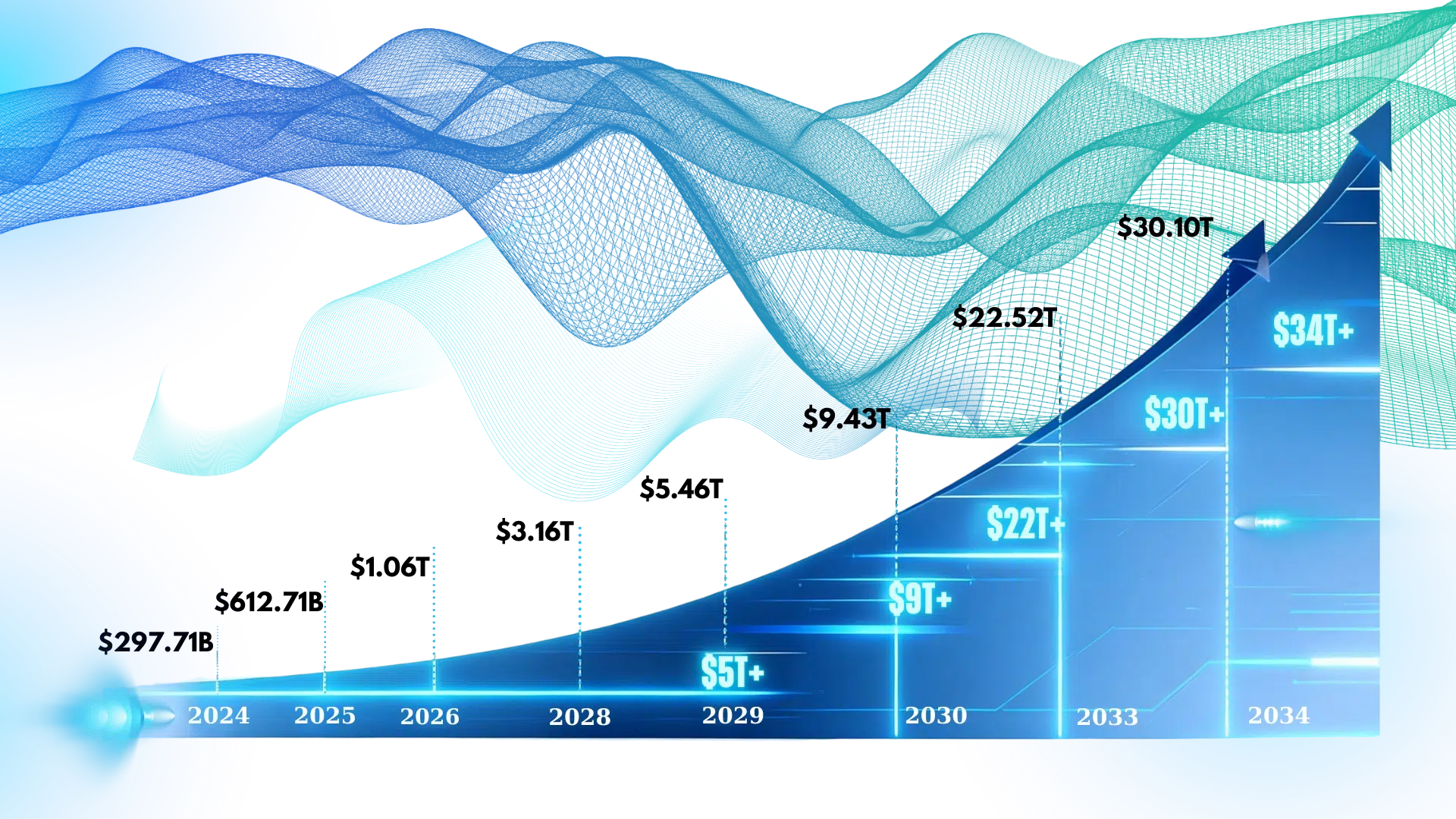
Market research forecasts suggest that this momentum may continue as technological infrastructure matures and regulatory clarity improves. Projections indicate that the market could reach about 1.06 trillion dollars in 2026, around 3.16 trillion dollars by 2028, approximately 5.46 trillion dollars in 2029, and close to 9.4 trillion dollars by 2030. This stage of growth is expected to be supported by the development of institutional tokenized funds and treasuries, the expansion of on-chain private credit markets, the tokenization of real estate and infrastructure, the emergence of interoperable blockchain systems, and the adoption of compliance-friendly custody and transfer frameworks.
Looking further ahead, longer-term projections from major financial institutions indicate that tokenization could become a structural component of global capital markets. Estimates suggest a potential market size of roughly 22.5 trillion dollars by 2033 and more than 30 trillion dollars by 2034. These outlooks generally assume broader regulatory harmonization, deeper institutional integration, and adoption across multiple asset classes such as trade finance, investment funds, and structured products.
At the same time, it is important to maintain a balanced perspective. These figures are scenario-based forecasts rather than guarantees, and actual growth will depend on several factors. Regulatory developments, the legal enforceability of tokenized ownership rights, institutional risk management standards, technology scalability and security, as well as overall market demand and liquidity conditions will all play significant roles. From an educational and institutional viewpoint, RWA tokenization is best understood as a gradual evolution of financial infrastructure rather than a sudden replacement of traditional systems. Its long-term impact will likely depend on how effectively digital recordkeeping, legal frameworks, and financial regulation continue to align.
What Are Real-World Assets?
Real-world assets represent the bridge between traditional economic activity and modern financial infrastructure. Unlike purely digital assets, which are created and governed entirely within software environments, RWAs are rooted in established economic systems that involve ownership rights, contractual obligations, valuation processes, and regulatory oversight. This connection to the real economy introduces additional layers of complexity, but also provides a foundation of legal recognition and enforceability.
Because real-world assets already operate within mature financial and legal frameworks, their integration into digital or tokenized systems often focuses on representation rather than transformation. The underlying asset remains governed by existing laws and market practices, while digital infrastructure may be used to support record-keeping, transparency, governance, or administrative efficiency. This distinction is central to understanding how RWAs function within broader financial ecosystems.
Real-world assets also vary significantly in how they are structured and managed across jurisdictions. Differences in property law, financial regulation, reporting standards, and market practices influence how RWAs are issued, transferred, and monitored. This jurisdictional variability is one reason why education around real-world assets emphasizes context, classification, and regulatory awareness rather than uniform technical models.
From an educational perspective, real-world assets are best understood as systems, not just objects or instruments. Each asset type is supported by a combination of legal documentation, custody arrangements, valuation methodologies, and oversight mechanisms. When digital technologies are introduced, they interact with these existing systems rather than replacing them. As a result, discussions around RWAs often extend beyond technology to include topics such as governance models, compliance requirements, and accountability structures.

Types of Real-World Assets
Real-world assets cover a wide range of categories.Each category introduces different legal, operational, and governance requirements. The most common include:
Why Real-World Assets Matter in Modern Finance
Real-world assets form the foundation of traditional financial markets and economic activity. They are used to support lending, investment, trade, and long-term value creation across industries and regions.
As financial infrastructure evolves, interest in RWA education has grown because:
- real-world assets connect digital systems to the real economy
- they introduce legal, regulatory, and operational considerations often absent in purely digital assets
- they highlight the importance of transparency, custody, and governance
Understanding real-world assets provides essential context for discussions around tokenization, decentralized governance, and compliant financial innovation.
How Real-World Assets Are Represented in Tokenized Systems
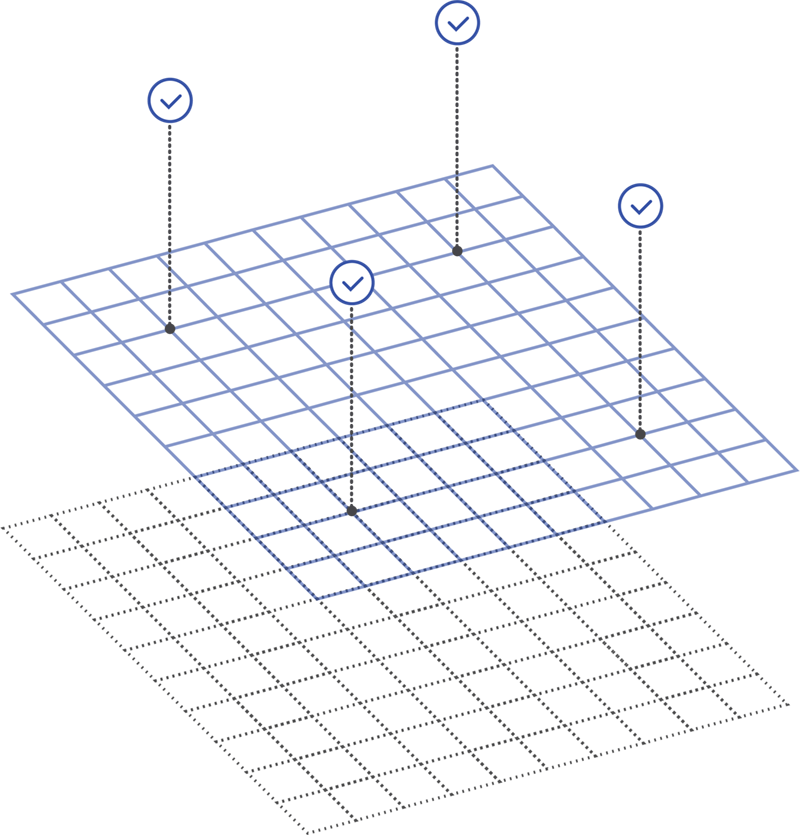
In tokenized finance, real-world assets may be represented digitally to improve record-keeping, transparency, or governance. This process does not change the underlying nature of the asset but introduces additional infrastructure layers.
At a high level, representation may involve:
Governance and Oversight of RWA Systems

Governance frameworks determine how authority and responsibility are distributed within real-world asset systems, particularly when ownership, administration, and record-keeping are supported by digital infrastructure. These frameworks define who is permitted to make decisions, how those decisions are executed, and which mechanisms exist to monitor and review outcomes.
In systems involving real-world assets, governance must account for both legal obligations and operational processes. This may include compliance with corporate governance rules, fiduciary responsibilities, reporting requirements, and audit procedures, alongside any digital governance mechanisms that support transparency or automation.
Hybrid governance structures are especially common in real-world asset contexts, as they aim to align traditional legal entities with technological systems. In such models, off-chain legal agreements and on-chain processes operate together to support accountability, enforceability, and oversight.
From an educational perspective, understanding governance provides insight into how risks are identified and managed, how disputes may be addressed, and how long-term system integrity is maintained. Effective governance is therefore not only a technical or organizational concern, but a foundational element of trust in real-world asset systems.
In practice, governance structures for real-world asset systems can take several forms. In centralized models, decision-making authority is typically assigned to a designated entity or management body responsible for administration, compliance, and reporting. These entities operate within established legal frameworks and are accountable through contractual obligations, regulatory oversight, and audit processes. Decisions are implemented through formal procedures, and accountability is enforced through existing legal mechanisms.
Decentralized governance models, by contrast, distribute decision-making across a broader group of participants, often using predefined rules encoded into digital systems. In these structures, governance actions such as voting, approvals, or parameter changes may be executed transparently according to agreed processes, while still relying on off-chain legal arrangements to ensure enforceability. Hybrid governance models combine these approaches by anchoring authority in a legal entity while using on-chain mechanisms to support transparency, record-keeping, and participation. This combination allows real-world asset systems to align technological processes with legal accountability and regulatory requirements.
Benefits and Limitations of RWA Tokenization
These benefits depend heavily on implementation quality, legal structure, and regulatory compliance. From an educational perspective, real-world asset tokenization may:
- improve transparency through standardized records
- support more efficient administrative processes
- enable clearer governance and auditability
Risks and Limitations of Real-World Assets in Tokenized Structures
Real-world assets can introduce efficiency and transparency benefits in digital systems, but they also involve operational and legal considerations. Key limitations may include:
- Legal enforceability: token holders’ rights depend on contracts, jurisdiction, and legal structure.
- Regulatory classification: RWAs may fall under securities, commodities, or property frameworks depending on location.
- Custody and control: custody arrangements and asset control processes can introduce counterparty or operational risk.
- Valuation and liquidity: pricing may rely on off-chain markets and periodic assessments, which can affect transparency.
- Disclosure quality: investor protection often depends on documentation, reporting standards, and audit practices.
These factors vary significantly by asset type and jurisdiction, which is why educational clarity and compliance-aware design are essential.

Real-World Assets vs Digital Assets

Real-world assets and digital assets differ primarily in where they originate and how they are governed. Real-world assets exist in the real economy and derive their value from physical ownership, contractual rights, or recognized financial activity. Their ownership and transfer are governed by established legal frameworks such as property law and contract law, and they typically require custody arrangements and legal verification to confirm ownership and enforce rights.
Digital assets, by contrast, exist natively within digital networks and do not rely on physical or real-economy activity for their existence. Their behavior, ownership, and transfer are governed primarily by software protocols and network rules rather than traditional legal systems. Value in digital assets is often linked to network design, utility, or participation mechanisms, and ownership is established through cryptographic keys rather than legal custody.
Understanding this distinction is essential when discussing tokenized finance, as systems that reference real-world assets must account for legal enforceability, verification, and regulatory oversight in ways that purely digital assets do not.
Real-World Assets vs Digital-Native Assets
| Real-World Assets (RWAs) | Digital-Native Assets |
|---|---|
| Backed by physical assets or legal claims | Exist natively on-chain without external claims |
| Ownership depends on contracts, property law, or securities law | Ownership depends primarily on protocol rules and private keys |
| Requires verification, custody, and legal enforceability | Requires network security and protocol integrity |
| Valuation linked to real economy and off-chain markets | Valuation linked mainly to network utility and market demand |
Regulatory Considerations for Real-World Assets
Regulatory considerations also influence how real-world assets are structured, documented, and governed when they are referenced within digital or tokenized systems. Because RWAs are anchored in the real economy, regulatory requirements often extend beyond technology to include legal ownership, enforceability of rights, custody arrangements, and accountability mechanisms.
The regulatory treatment of real-world assets may differ depending on whether an asset is classified as property, a financial instrument, or a contractual claim, and these classifications can vary across jurisdictions. As a result, compliance approaches must take into account local laws, cross-border considerations, and evolving regulatory guidance.
From an educational perspective, understanding regulatory frameworks helps clarify why transparency, documentation, and oversight are critical components of real-world asset systems. Regulation does not only address risk mitigation, but also establishes common standards that support trust, market stability, and consistent interpretation of asset-related rights and obligations.
In Conclusion: Real-world assets are inherently subject to legal and regulatory frameworks, which vary significantly by jurisdiction and asset type. Any system that references or represents RWAs must consider property and contract law, financial regulation, and disclosure and reporting obligations.

Check Other Pillars
Discover our Knowledge Base
LearnHub is structured around core educational pillars that define our knowledge framework. Each pillar is designed to provide structured, research-based explanations that promote clarity, transparency, and institutional understanding within tokenized financial ecosystems.
FAQ
Frequently Asked Questions About Real-World Assets (RWA)

Real-world assets refer to physical or traditional financial assets that exist outside blockchain systems but can be digitally represented through tokenization and blockchain infrastructure. This allows them to be integrated into modern digital investment environments and accessed through structured ownership models.
Short Summary: Real-World Assets Explained
Real-world assets refer to assets that exist in the physical or traditional financial world but can be represented digitally through blockchain systems.
Understanding real-world assets is important because tokenization technologies allow traditional assets such as property, commodities, and financial instruments to be connected with blockchain-based investment platforms.
In modern financial systems, real-world assets may include real estate, commodities, infrastructure assets, or other forms of value that can be digitally represented and traded through tokenized frameworks.
A key concept behind real-world assets is tokenization, which allows physical assets to be linked with blockchain records, enabling new forms of ownership representation and digital market participation. Readers often also review related terms such as asset tokenization, fractional ownership, and underlying asset.
A complete understanding of real-world assets also requires examining tokenization models, custody frameworks, regulatory considerations, and how traditional assets connect with blockchain-based infrastructure across different investment environments.
Why Real-World Assets Matter
Readers researching real-world assets often want to understand how traditional assets connect with blockchain infrastructure and how tokenization systems represent physical value digitally.
This pillar page brings together the most important areas of RWA education, including asset definition, tokenization infrastructure, real estate tokenization, commodity tokenization, and the risks and benefits of RWA markets.
The blockchain glossary hub also supports this learning path with definitions such as real-world assets, tokenized real estate, tokenized commodities, and custody.
External Reference
For institutional research on real-world assets and tokenization infrastructure, review publications from the Bank for International Settlements (BIS).
Additional financial research can also be found through the OECD and the International Monetary Fund (IMF).
Explore the Core Topics Within Real-World Assets
To understand real-world assets fully, it helps to study the subject through its main educational clusters. These sections explain how physical value connects with blockchain infrastructure, digital ownership models, and tokenized investment structures across modern financial systems.
1. What Are Real-World Assets
- Real-World Assets vs Digital Assets
- Why Real-World Assets Matter in Modern Finance
- Examples of Real-World Assets Used in Tokenization
- Are Real-World Assets the Same as Physical Assets?
- How Real-World Assets Are Represented on Blockchain
2. Real-World Asset Tokenization Explained
- How Real-World Asset Tokenization Works Step-by-Step
- What Is Asset Tokenization
- On-Chain vs Off-Chain Asset Tokenization Models
- Who Verifies Real-World Assets in Tokenized Systems
- Custody Models Used in RWA Tokenization
These first two clusters introduce the basic logic of real-world assets and connect the topic with concepts such as asset tokenization, beneficial ownership, and asset registry in structured educational context.
Continue Learning Across RWA Tokenization
3. Tokenized Real Estate
- How Tokenized Real Estate Works
- Fractional Ownership in Tokenized Real Estate
- Benefits and Risks of Tokenized Real Estate
- What Types of Properties Can Be Tokenized
- Legal Structures Behind Tokenized Real Estate
4. Tokenized Commodities
- What Are Tokenized Commodities
- Tokenized Gold vs Physical Gold
- How Commodity Tokenization Works
- Benefits and Risks of Tokenized Commodities
- Are Tokenized Commodities Backed by Real Assets
5. Benefits and Risks of RWA Tokenization
- Main Risks of Real-World Asset Tokenization
- Transparency Reduces Risk in Tokenized Assets
- Regulatory Risks in RWA Tokenization
- How Investors Assess Risk in Tokenized RWAs
- Does RWA Tokenization Reduce Market Volatility
Related glossary terms for these clusters include tokenized real estate, tokenized commodities, cash flow rights, and redemption rights.